
A Global Leader in
High-Pressure Cylinders
and Green Energy
High-Pressure Cylinders
and Green Energy
Creating a breathtaking aquascape requires more than just good lighting and substrate—a stable supply of carbon dioxide (CO2) is the true secret to vibrant, flourishing aquatic plants. For beginners stepping into the world of planted tanks, choosing the right equipment often leads to one major question: "Should I buy an aluminum or a steel CO2 cylinder?"
With over 30 years of expertise in manufacturing high-pressure cylinders, Bobson Cylinders is here to break down the differences in material science, safety, and aquarium application to help you choose the perfect CO2 system for your planted tank!
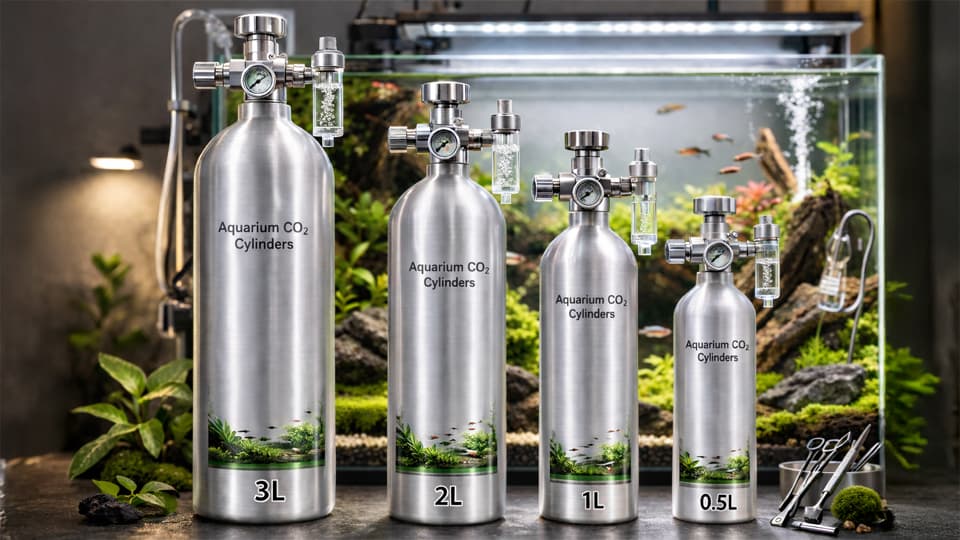
In nature, aquatic plants absorb CO2 from the water to perform photosynthesis. However, in the closed environment of an aquarium, natural CO2 levels are far too low. Without CO2 injection, plants often suffer from stunted growth, yellowing, or algae takeovers.
A professional CO2 cylinder, paired with a high-quality regulator and diffuser, provides a steady stream of pure CO2. This is essential for cultivating demanding plant species (like red stem plants, mosses, and Riccia fluitans) and achieving that satisfying "pearling" effect.
When selecting a gas cylinder, the material is the most critical factor. The cabinet under an aquarium is typically a high-humidity environment, which puts the cylinder's corrosion resistance to the test. Let's compare the two main options:
| Feature | Aluminum Cylinder (6061-T6) | Traditional Steel Cylinder |
|---|---|---|
| Material | Aerospace-grade 6061-T6 Aluminum | Carbon steel or alloy steel |
| Weight | Lightweight (Approx. 60% of a steel tank) | Heavy, making transport and refills physically demanding |
| Corrosion Resistance | Excellent. Forms a natural oxide layer that prevents rust | Poor. Highly prone to external and internal rust if exposed to moisture |
| Lifespan & Safety | Long-lasting. No risk of internal rust clogging the regulator | Internal rust can weaken the tank structure and pose high-pressure risks |
| Aesthetics | Sleek metallic finish, various surface treatments (anodized, brushed) | Usually covered in thick industrial paint (often green or black) |
| Price | Slightly higher (Better long-term investment) | Lower (Suitable for extremely tight budgets) |
A high-pressure gas cylinder is not just a standard accessory; it is a critical piece of equipment that directly impacts the safety of your home. Always look for these three markers of quality:
Q1: How often should CO2 cylinders be inspected?
For ultimate safety, both aluminum and steel cylinders should undergo a professional internal inspection and Hydrostatic Test every 3 to 5 years to ensure there is no metal fatigue or hidden damage.
Q2: Can aluminum CO2 cylinders explode?
As long as you purchase from a certified manufacturer (like Bobson Cylinders) and use it in a normal environment (avoiding direct sunlight and high heat sources), aluminum cylinders have an extremely high safety margin. In the rare event of over-pressurization, the regulator's burst disk will safely rupture to release the gas, preventing catastrophic tank failure.
For aquascapers who demand aesthetic perfection and equipment reliability, an aluminum CO2 cylinder is undoubtedly the best long-term investment. It completely eliminates the headache of rust-clogged valves while perfectly complementing the sleek look of modern aquarium setups.
Looking for safe, durable, and internationally certified aluminum high-pressure cylinders? Bobson Cylinders is your most reliable OEM/ODM partner for high-pressure gas storage and green energy solutions worldwide.
