A Global Leader in
High-Pressure Cylinders
and Green Energy

News & Updates

2026.0625
Date: June 25–27, 2026
Location: Taipei World Trade Center (TWTC) / TaiNEX (depending on organizer)
2026.0623
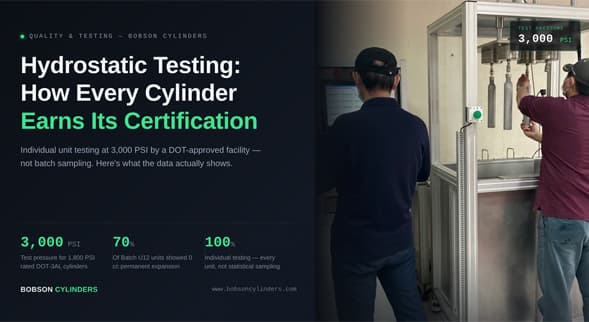
Hydrostatic testing for gas cylinders is a non-destructive safety validation method that pressurizes cylinders with water to test pressures exceeding normal service levels to verify structural integrity and identify potential weaknesses before field deployment.
2026.0602
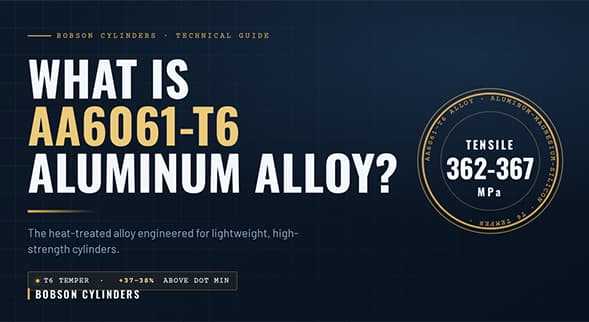
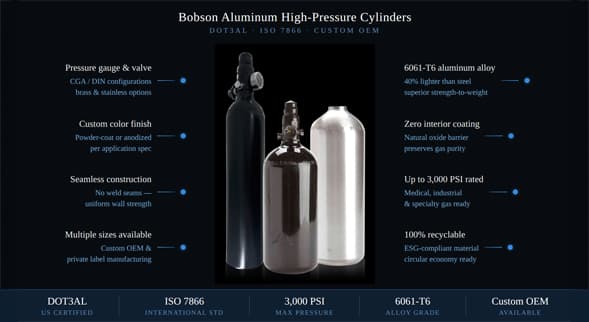
The most significant aluminum alloy innovation in high-pressure cylinder manufacturing is the proven application of AA6061-T6, which delivers tensile strength 37-38% above DOT minimum requirements (362-367 MPa versus the 265 MPa baseline).
2026.0520
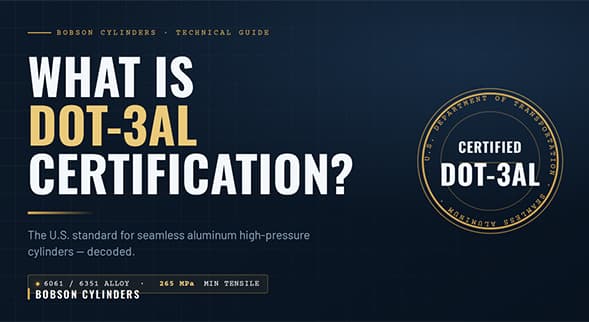
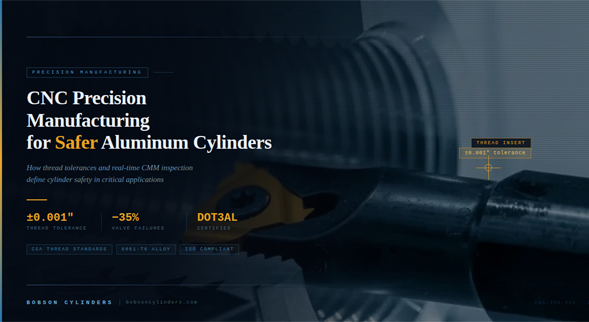
Modern CNC machining processes combined with advanced quality control protocols ensure DOT3AL certified cylinders meet stringent safety requirements while reducing defect rates by up to 40% compared to conventional manufacturing methods, making them ideal for medical oxygen, industrial gas storage, and safety-critical applications.
2026.0519
Date: May 19–22, 2026
Location: São Paulo Expo, Brazil
2026.0505
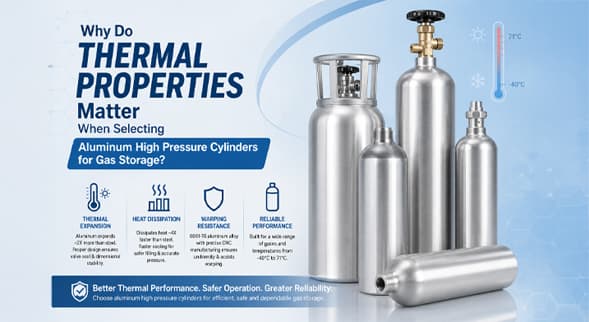
Thermal properties are critical when selecting aluminum high pressure cylinders because aluminum's thermal expansion coefficient is approximately twice that of steel, affecting dimensional stability during filling and temperature fluctuations.
2026.0427
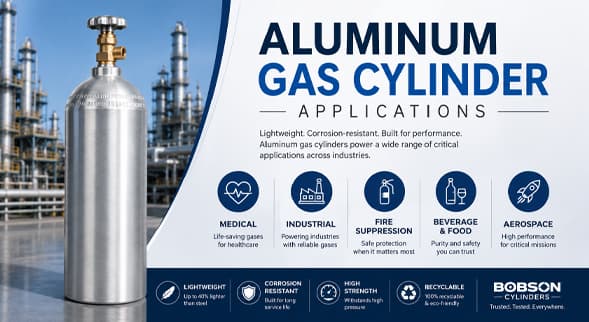
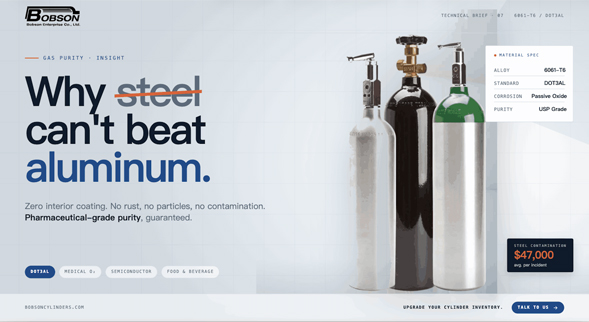
Aluminum cylinders prevent gas contamination more effectively than steel through natural oxidation resistance that eliminates the need for interior coatings. While steel cylinders require protective linings that can degrade and contaminate gases, aluminum forms a stable oxide layer that prevents corrosion without releasing particles into stored gases.
2026.0410
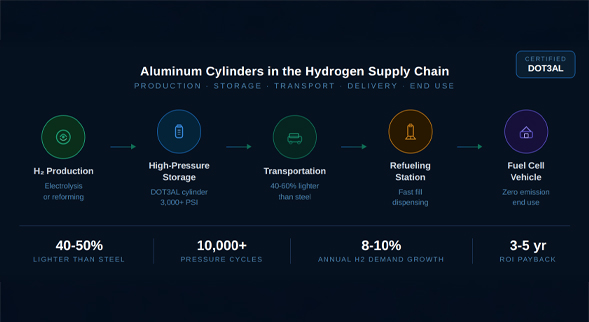
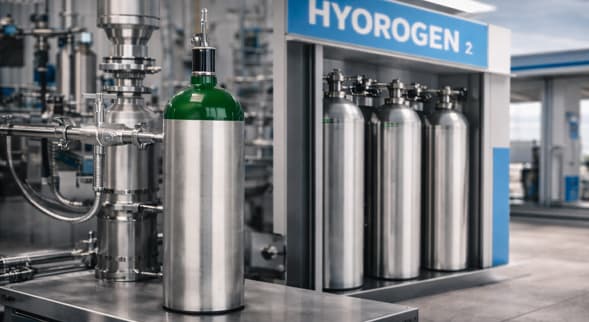
Aluminum cylinders are ideal for hydrogen storage and transportation due to their exceptional strength-to-weight ratio, superior pressure handling capabilities up to 3,000+ PSI, and DOT3AL certification standards that ensure safe hydrogen containment.
2026.0410
Aluminum cylinders prevent gas contamination more effectively than steel through natural oxidation resistance that eliminates the need for interior coatings. While steel cylinders require protective linings that can degrade and contaminate gases, aluminum forms a stable oxide layer that prevents corrosion without releasing particles into stored gases.
2026.0331
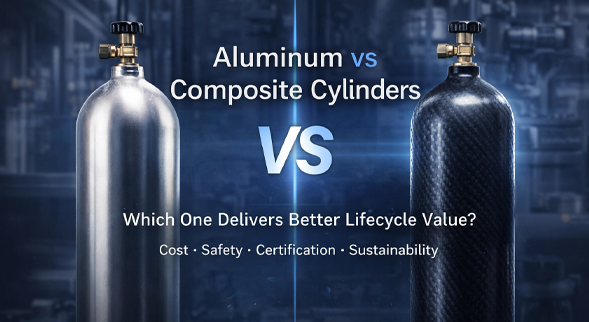
Aluminum cylinders maintain distinct advantages over composite cylinders in gas storage applications through superior cost-effectiveness, proven recyclability, established DOT3AL certification pathways, and decades of safety validation.
2026.0317
Aluminum's inherent corrosion resistance provides critical advantages in medical oxygen storage where contamination risks must be minimized. Unlike steel cylinders that require internal coatings to prevent oxidation, aluminum naturally forms a protective oxide layer that prevents rust and maintains gas purity.
2026.0317
Aluminum's recyclability aligns perfectly with the clean energy goals driving hydrogen adoption. Unlike composite materials that present end-of-life disposal challenges, aluminum cylinders can be recycled indefinitely without performance degradation.
2026.0304
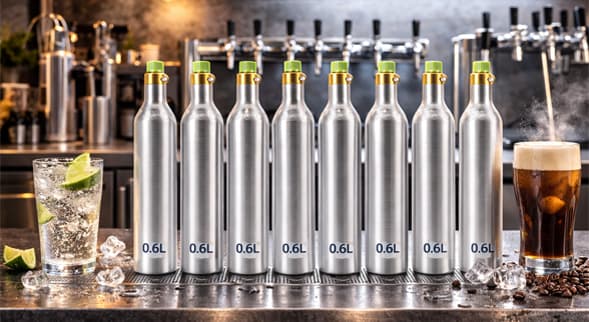
We must issue a serious warning: Using industrial-grade cylinders and gases for food and beverages will not only ruin the flavor of your drinks but also hide severe food safety and regulatory risks.
2026.0304
For beginners stepping into the world of planted tanks, choosing the right equipment often leads to one major question: "Should I buy an aluminum or a steel CO2 cylinder?"
2026.0304
When operating pressures routinely reach 3000 PSI or even 4500 PSI, the "safety" and "lightweight portability" of the cylinder become the two most critical concerns for any serious airgunner.
2026.0304
With 30 years of precision manufacturing, Bobson Cylinders explains how our UAV gas solutions meet aerospace-grade reliability standards.
2026.0209
Date: February 9–12, 2026
Location: Dubai Exhibition Centre, UAE
2026.0115
In aluminum high-pressure cylinder design, outside diameter, wall thickness, and length directly define pressure rating and water capacity.
This document explains DOT 3AL–based engineering calculations for design and regulatory reference purposes only.
2026.0113
In high-pressure vessels and medical-related supply chains, the word certification is often used as a generic term. In reality, DOT, TÜV, and ISO represent three fundamentally different systems, each addressing a different level of risk and responsibility.
2026.0112
Internally, we do not ask: should we make a 4500 PSI cylinder?
We ask a more fundamental question: Under what conditions is a 4500 PSI design the most responsible choice - for the user, the system, and long-term safety?