Food-Grade vs. Industrial-Grade Cylinders: Hidden Risks and Regulatory Standards the F&B Industry Cannot Ignore
2026.03.04
The difference between food-grade and industrial-grade cylinders is not just the label: food-grade cylinders must undergo oil-free cleaning, vacuuming, and drying before leaving the factory; industrial-grade cylinders lack this standard, and the interior may retain cutting oil, rust, and metal shavings, directly affecting beverage safety and regulatory compliance.
With the popularity of soda makers, craft draft beer, and nitro cold brew coffee, CO₂ and nitrogen have become essential supplies for food and beverage bars. Many business owners mistakenly use industrial cylinders to reduce costs, which not only affects the beverage's flavor but may also violate food hygiene regulations, facing fines or business suspension.
Food-Grade vs. Industrial-Grade Cylinders: A Glance at Core Differences
Three Substantial Risks of Mixing in Industrial Cylinders
- Violating Food Safety Regulations: Using cylinders without food-grade certification can lead to fines from competent authorities or orders to suspend business, affecting brand reputation.
- Flavor Pollution: Residual cutting oil or rust will enter the beverage along with the gas, producing a chemical metallic taste, directly leading to customer complaints.
- Damaging Commercial Equipment: Rust and impurities inside industrial cylinders flake off under high-pressure airflow, potentially clogging or wearing out the equipment's precision valves. Repair or replacement costs can exceed the price difference of the cylinders by dozens of times.
Standards for the F&B Industry to Correctly Select Cylinders
It is recommended that F&B business owners choose food-grade aluminum cylinders that meet the following conditions to reduce food safety risks and regulatory penalties:
- Possess ISO certification (e.g., ISO 13485 or ISO 9001).
- Verified to have undergone oil-free cleaning, vacuuming, and drying before leaving the factory.
- Made of aluminum alloy (the surface naturally forms a protective oxide layer, does not produce rust, and the weight is about half that of a steel cylinder).
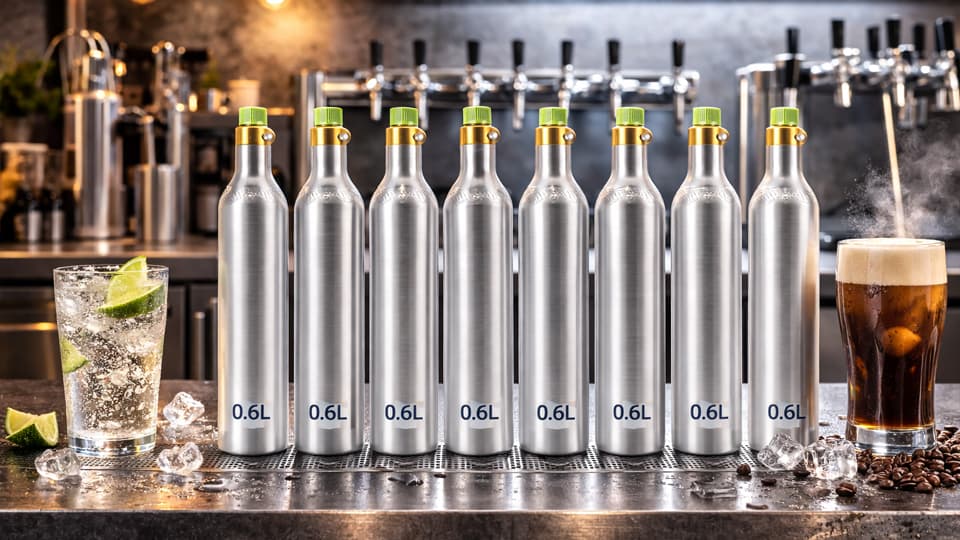
Bobson's food-grade aluminum cylinders have passed dual ISO 13485 and ISO 9001 international certifications, reaching medical-grade manufacturing standards, and are suitable for soda makers, draft beer machines, and nitro coffee equipment.
FAQ
- What is a food-grade cylinder?
Food-grade cylinders must pass strict oil-free cleaning, drying, and vacuuming processes before leaving the factory to ensure there are no metal shavings and oil stains inside, specifically designed for storing gases for human consumption (such as CO₂, nitrogen).
- Can beverage shops use industrial CO₂ cylinders meant for welding?
No. Industrial cylinders contain cutting oil and rust inside, which will contaminate the flavor of the beverage, violate food hygiene regulations, and may result in fines or business suspension.
- Why is aluminum alloy the preferred material for cylinders in the F&B industry?
The surface of aluminum alloy naturally forms a protective oxide layer; it will not produce rust when in contact with moisture, eliminating the corrosion risk of carbon steel cylinders. At the same time, it weighs about half as much as a steel cylinder, making it convenient for bar staff to handle and replace.
- What certifications do Bobson's food-grade cylinders have?
Bobson's high-pressure cylinders have passed dual ISO 13485 and ISO 9001 international certifications, with manufacturing standards meeting medical-grade requirements while also complying with food-grade gas storage regulations.
- What should I do if the tubing of my soda maker or draft beer machine is clogged with rust?
This is usually caused by using an industrial steel cylinder with internal rust. It is recommended to immediately stop using that cylinder, ask the equipment supplier to clean or replace the valves, and completely switch to aluminum food-grade cylinders to prevent the problem from recurring.