A Global Leader in
High-Pressure Cylinders
and Green Energy
High-Pressure Cylinders
and Green Energy
The qualification standards for drone emergency cylinders cover three aspects: material stability under extreme temperature differences (-20°C to 60°C), airtight durability under high-frequency vibration, and zero-leakage verification during long-term standby. Only by meeting these three standards can the parachute system be guaranteed to actuate 100% at critical moments.
With the widespread application of commercial drones in logistics, agriculture, and high-altitude mapping, flight safety has become a core industry issue. The "drone parachute system" is responsible for instantaneous ejection and rescue when a drone loses control or malfunctions, and the key component driving this system is the onboard high-pressure cylinder. The reliability of the cylinder directly determines the effectiveness of the entire safety system.
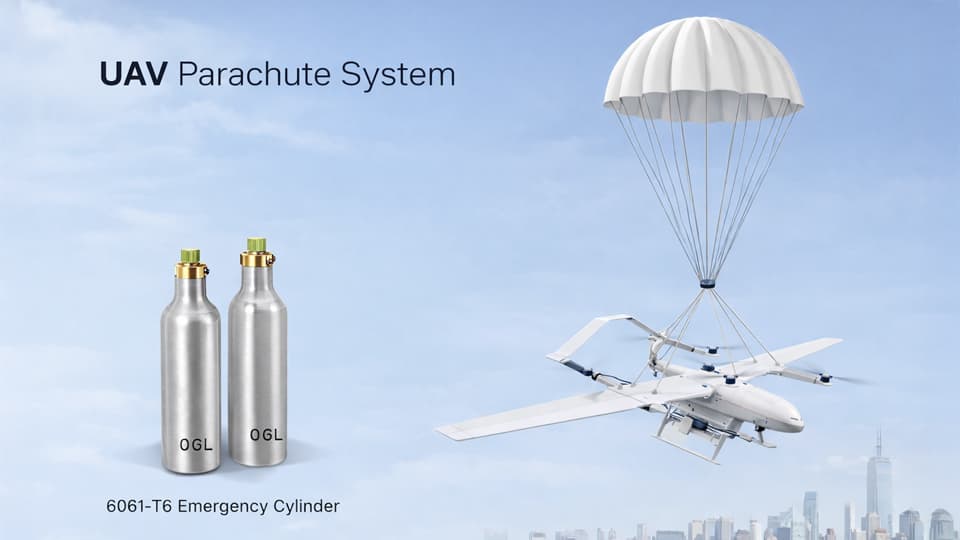
The flight environment for drones is far more severe than that of ground equipment. Cylinders must be designed to cope with the following three simultaneous extreme conditions:
| Challenge Scenario | Physical Impact | Bobson Aluminum Cylinder Solutions |
|---|---|---|
| Extreme Temperature Differences (-20°C to 60°C) | Drastic fluctuations in gas pressure, making materials prone to brittle fracture. | Uses 6061-T6 aluminum alloy, offering stable linear expansion coefficients and excellent low-temperature toughness. |
| High-Frequency Vibration Fatigue | Micro-cracking in threads or loss of airtightness. | Precision thread machining and reinforced sealing designs, verified through simulated flight vibration tests. |
| High Salt Spray & High Humidity | Traditional steel cylinders rust, causing ejection mechanisms to jam. | Aluminum alloy possesses natural corrosion resistance, further enhanced by anodizing treatment. |
Addressing the three challenges above, the long-term reliability of a cylinder depends on three links: material selection, manufacturing precision, and factory inspection.
The long-term reliability of drone cylinders depends on two conditions: the material's anti-fatigue capability and pre-factory leakage verification. Bobson uses aluminum alloy combined with helium leak testing to ensure zero leakage during years of standby.
Bobson holds ISO 13485 certification, with manufacturing precision meeting medical and aerospace application requirements, and currently provides OEM/ODM services for multiple global drone safety system manufacturers.