
A Global Leader in
High-Pressure Cylinders
and Green Energy
High-Pressure Cylinders
and Green Energy
Aluminum cylinders have become the preferred choice for medical oxygen storage due to their lightweight portability, superior corrosion resistance, and exceptional safety profile. Healthcare providers worldwide are transitioning to aluminum cylinders because they weigh up to 40% less than steel alternatives while maintaining DOT3AL certification standards, making them ideal for home healthcare, emergency response, and portable medical applications where patient mobility matters most.
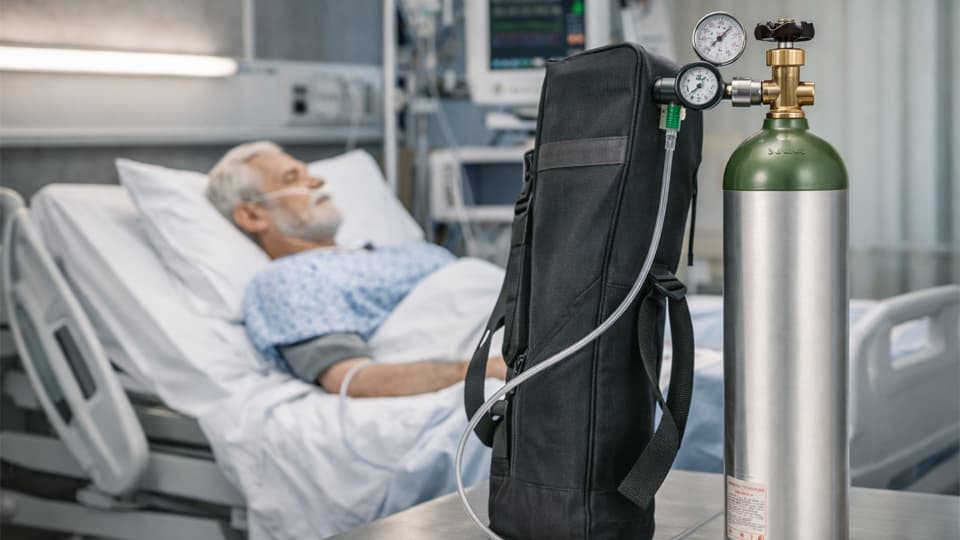
The global medical oxygen market is experiencing unprecedented growth, driven by expanding healthcare infrastructure and increasing demand for portable oxygen solutions. Following recent global health challenges, healthcare sectors in Australia, Southeast Asia, and emerging markets have accelerated investments in medical gas delivery systems. Industry projections indicate the medical gas cylinder market will grow at a compound annual rate exceeding 6% through 2030, with aluminum cylinders capturing an increasing market share.
Healthcare providers are prioritizing lightweight, durable solutions that enhance patient mobility and reduce caregiver strain. Traditional steel cylinders, while functional, create logistical challenges in home healthcare settings where patients or family members must transport oxygen equipment. Aluminum cylinders address this critical need by reducing weight without compromising storage capacity or safety standards. A standard M6 medical oxygen cylinder in aluminum weighs approximately 1.8 kg compared to 3.2 kg for steel equivalents—a difference that significantly impacts daily usability for patients with respiratory conditions.
Regulatory compliance and safety certifications have become non-negotiable requirements in medical gas applications. DOT3AL certified aluminum cylinders meet stringent safety standards for medical oxygen storage, including pressure testing, material specifications, and manufacturing quality controls. Healthcare facilities, home care providers, and emergency medical services require cylinders that comply with medical gas regulations while delivering consistent performance under demanding conditions.
Aluminum's inherent corrosion resistance provides critical advantages in medical oxygen storage where contamination risks must be minimized. Unlike steel cylinders that require internal coatings to prevent oxidation, aluminum naturally forms a protective oxide layer that prevents rust and maintains gas purity. This characteristic is particularly important in medical applications where even trace contaminants can compromise patient safety. Medical-grade oxygen must meet USP (United States Pharmacopeia) purity standards of 99.5% or higher, and aluminum cylinders help maintain this purity throughout the cylinder's service life.
The durability of aluminum cylinders reduces long-term ownership costs for healthcare providers. While initial acquisition costs may be slightly higher than steel alternatives, aluminum cylinders offer extended service lives with lower maintenance requirements. They resist denting and damage better than steel when subjected to the frequent handling common in medical environments. Healthcare facilities report that aluminum cylinders maintain structural integrity and pass hydrostatic testing for 20+ years, providing excellent return on investment.
Temperature stability in aluminum cylinders ensures consistent oxygen delivery across varying environmental conditions. Medical oxygen applications span from climate-controlled hospital environments to emergency response vehicles and home settings with variable temperatures. Aluminum's thermal conductivity helps stabilize internal gas temperatures more effectively than steel, reducing pressure fluctuations th at could affect oxygen delivery systems and regulator performance.
Patient mobility and quality of life improve dramatically with lightweight aluminum oxygen cylinders. Home oxygen therapy patients using portable concentrators or cylinder systems gain independence when equipment weight decreases. Aluminum cylinders enable patients with COPD, pulmonary fibrosis, and other respiratory conditions to maintain active lifestyles while managing their oxygen therapy requirements. Healthcare studies indicate that portable oxygen solutions with aluminum cylinders increase patient compliance with prescribed oxygen therapy by reducing the physical burden of equipment transport.
Emergency medical services benefit from aluminum cylinders' portability during critical response situations. Paramedics and first responders carry multiple cylinders in ambulances and emergency kits where weight reduction translates directly to operational efficiency. The ability to quickly transport oxygen equipment up stairs, through crowded spaces, or across difficult terrain can impact patient outcomes in emergency scenarios. Fire departments and rescue services increasingly specify aluminum cylinders in their medical gas procurement for these practical advantages.
Aviation medical applications require the weight savings that only aluminum cylinders provide. Medical transport helicopters, air ambulances, and commercial aircraft medical emergency kits universally employ aluminum cylinders due to strict weight restrictions. Every kilogram saved in medical equipment allows for additional fuel efficiency or payload capacity—critical factors in aviation operations.
Healthcare applications often require customized cylinder solutions that standard offerings cannot address. Specialized medical equipment manufacturers, hyperbaric therapy providers, a nd veterinary medical facilities need cylinders with specific dimensions, valve configurations, or pressure ratings. Custom aluminum cylinder manufacturing enables healthcare innovators to develop proprietary medical devices and oxygen delivery systems optimized for particular patient populations or treatment protocols.
DOT3AL certification flexibility allows manufacturers like Bobson Cylinders to produce medical oxygen cylinders in various sizes and specifications. From compact portable units for personal use to larger institutional cylinders for hospital central supply systems, aluminum cylinder manufacturing can be tailored to precise medical gas storage requirements. Custom manufacturing capabilities include specialized valve threads, pressure ratings from 2015 to 3000 PSI, and capacities ranging from 2 to 150 cubic feet to match diverse healthcare applications.
Quality assurance and traceability in custom medical cylinder manufacturing provide healthcare providers with confidence in their gas storage systems. Each aluminum cylinder manufactured to medical specifications undergoes rigorous testing including hydrostatic pressure testing, visual inspection, and material verification. Serialized tracking enables complete traceability from manufacturing through service life—an essential requirement for medical device quality management systems and regulatory compliance.
The transition to aluminum cylinders represents a strategic investment in patient care quality, operational efficiency, and long-term cost management. Healthcare providers evaluating medical gas storage solutions should consider total cost of ownership including acquisition, maintenance, replacement cycles, and operational impacts on patient care and staff efficiency. Aluminum cylinders consistently demonstrate superior performance across these evaluation criteria.
Selecting a certified manufacturer with medical gas expertise ensures your cylinder solutions meet both regulatory requirements and practical healthcare application needs. Working with experienced DOT3AL certified manufacturers provides access to technical support, custom engineering capabilities, and quality assurance processes that generic cylinder suppliers cannot match.
Contact Bobson Cylinders today to discuss your medical oxygen cylinder requirements. Our engineering team specializes in custom aluminum cylinder solutions for healthcare applications, with DOT3AL certification and comprehensive quality assurance. Whether you need standard medical oxygen cylinders or custom solutions for specialized healthcare equipment, we deliver the performance, safety, and reliability your patients deserve.
