
A Global Leader in
High-Pressure Cylinders
and Green Energy
High-Pressure Cylinders
and Green Energy
Aluminum cylinders are ideal for hydrogen storage and transportation due to their exceptional strength-to-weight ratio, superior pressure handling capabilities up to 3,000+ PSI, and DOT3AL certification standards that ensure safe hydrogen containment. These lightweight high-pressure cylinders reduce transportation costs by 40-60% compared to steel alternatives while maintaining structural integrity essential for hydrogen's unique storage requirements in fuel cell vehicles and clean energy infrastructure.
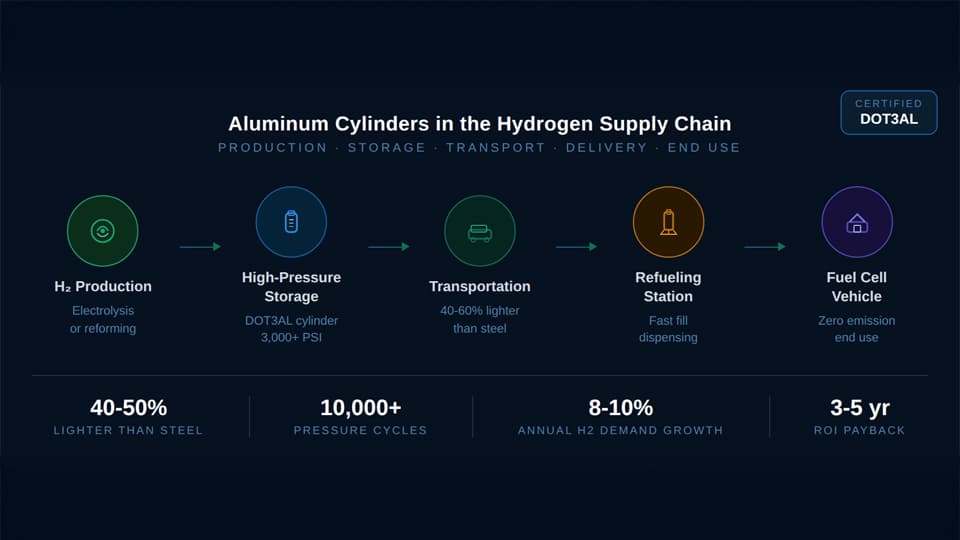
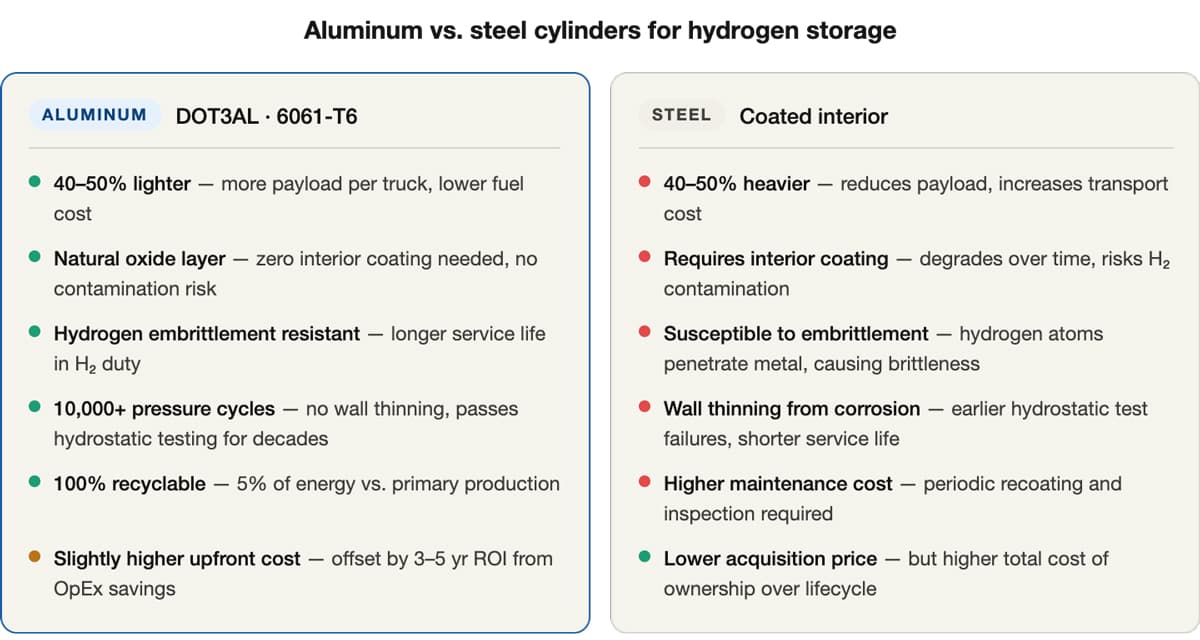
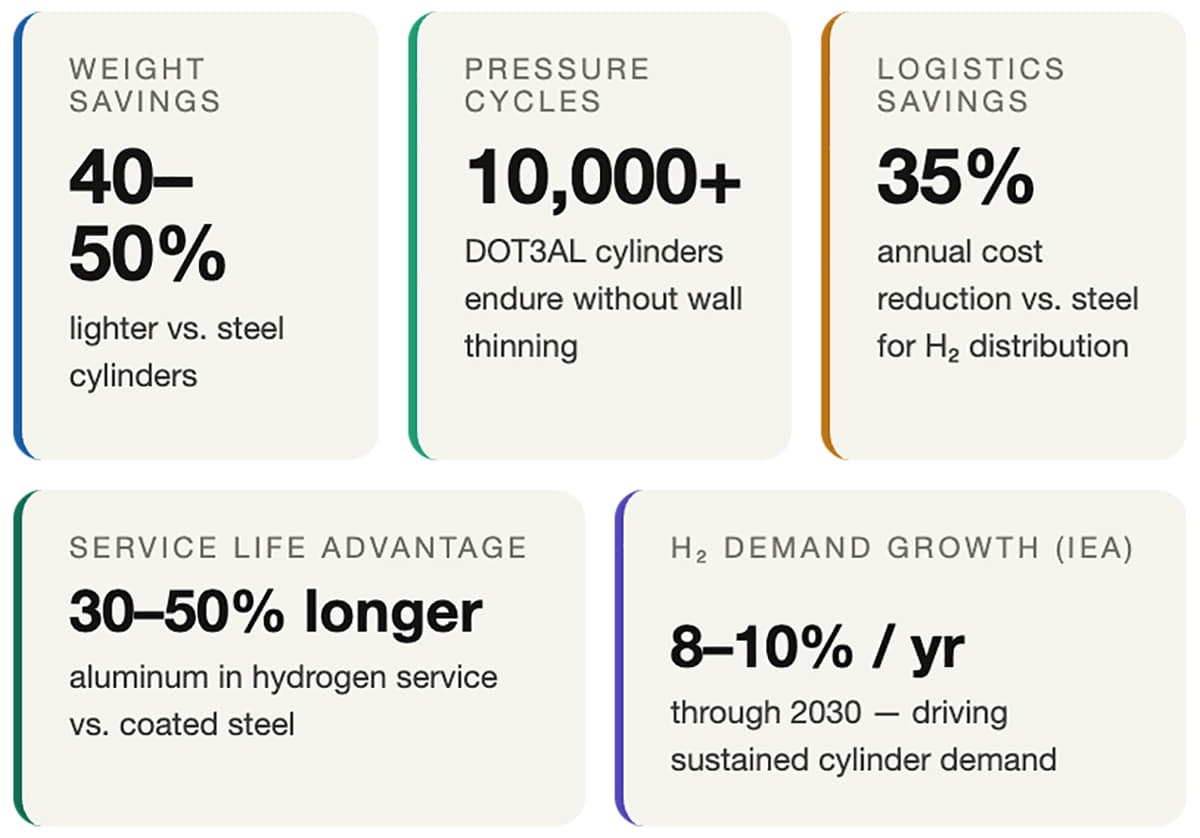
The primary advantage of aluminum cylinders in hydrogen storage is their outstanding strength-to-weight ratio, which directly impacts transportation economics and operational efficiency. Hydrogen storage requires high-pressure containment typically ranging from 5,000 to 10,000 PSI for compressed hydrogen gas applications. Aluminum cylinders achieve these pressure requirements while weighing 40-50% less than comparable steel cylinders, making them essential for mobile hydrogen applications including fuel cell electric vehicles (FCEVs) and portable power systems.
This weight reduction translates into significant cost savings across the hydrogen supply chain. For B2B enterprises managing hydrogen distribution networks, lighter cylinders mean increased payload capacity per delivery vehicle, reduced fuel consumption during transportation, and easier handling at refueling stations. A standard aluminum high-pressure cylinder can reduce logistics costs by up to 35% annually compared to traditional steel options, according to industrial gas distribution data from 2025.
DOT3AL certified aluminum cylinders from manufacturers like Bobson Cylinders meet rigorous safety standards specifically designed for high-pressure gas containment. These certifications ensure cylinders can withstand the pressure cycling and mechanical stresses inherent in hydrogen storage applications, where safety is paramount due to hydrogen's flammability and small molecular size.
Aluminum's natural oxide layer provides inherent corrosion resistance that prevents hydrogen embrittlement and maintains gas purity throughout the cylinder lifecycle. Unlike steel cylinders that require protective internal coatings to prevent rust and contamination, aluminum cylinders naturally resist oxidation. This characteristic is particularly critical for hydrogen applications because even minor contamination can damage fuel cell membranes and reduce system efficiency.
Hydrogen embrittlement, a phenomenon where hydrogen atoms penetrate metal structures causing brittleness, poses significant risks with certain materials. Aluminum alloys used in DOT3AL certified cylinders demonstrate superior resistance to hydrogen embrittlement compared to standard steel compositions. This material property extends cylinder service life and reduces maintenance requirements, with aluminum cylinders typically lasting 30-50% longer in hydrogen service than coated steel alternatives.
The non-reactive surface of aluminum cylinders ensures consistent hydrogen quality from filling to end use. For B2B customers in fuel cell manufacturing, renewable energy storage, and industrial hydrogen applications, gas purity directly impacts operational performance and product quality. Custom manufacturing processes at Bobson Cylinders include specialized internal treatments that further enhance contamination resistance for critical hydrogen storage applications.
Hydrogen storage systems undergo frequent pressure cycling as cylinders are filled, transported, and emptied, making fatigue resistance a critical performance factor. Aluminum cylinders demonstrate excellent fatigue characteristics under repeated pressure cycling, maintaining structural integrity through thousands of fill-discharge cycles. Industry testing shows DOT3AL aluminum cylinders can withstand 10,000+ pressure cycles while maintaining safety margins, essential for hydrogen infrastructure where cylinders may be refilled multiple times weekly.
The elastic properties of aluminum alloys allow cylinders to expand and contract under pressure without permanent deformation. This elastic behavior prevents the micro-cracking that can occur in steel cylinders subjected to continuous pressure cycling. For hydrogen transportation applications, where cylinders experience temperature fluctuations and pressure variations during transit, aluminum's material properties provide consistent performance across operational conditions.
Custom manufacturing capabilities enable optimization of cylinder designs for specific hydrogen storage pressures and cycling requirements. Bobson Cylinders works with B2B enterprises to engineer high-pressure cylinders that balance weight, capacity, and durability for applications ranging from stationary hydrogen storage at refueling stations to mobile cylinders for fuel cell vehicle markets.
As hydrogen infrastructure expands globally, standardized cylinder specifications ensure compatibility across filling stations, transportation networks, and end-use applications. DOT3AL certified aluminum cylinders meet internationally recognized standards that facilitate cross-border hydrogen transportation and support emerging hydrogen economy infrastructure. This standardization reduces operational complexity for B2B enterprises managing multi-site hydrogen distribution networks.
The aluminum cylinder manufacturing process allows for precise dimensional control and consistent quality. Thread specifications, valve connections, and pressure ratings can be customized while maintaining DOT3AL certification, enabling seamless integration with existing hydrogen handling equipment. For enterprises transitioning to hydrogen energy, aluminum cylinders provide backward compatibility with established gas handling infrastructure while supporting future scaling requirements.
Emerging hydrogen applications including fuel cell vehicles, renewable energy storage systems, and industrial hydrogen networks require flexible cylinder solutions. Aluminum's formability enables custom cylinder shapes and sizes that optimize space utilization in vehicles and stationary installations. Bobson Cylinders specializes in custom manufacturing for unique hydrogen storage applications, working directly with engineering teams to develop cylinders that meet specific dimensional, capacity, and certification requirements.
The clean energy transition driving hydrogen adoption makes aluminum cylinders' environmental profile increasingly relevant for corporate sustainability goals. Aluminum is infinitely recyclable with recycling processes requiring only 5% of the energy needed for primary production. For B2B enterprises with sustainability mandates, aluminum cylinders support circular economy objectives while providing technical performance advantages in hydrogen applications.
Total cost of ownership analysis consistently favors aluminum cylinders for hydrogen storage applications. While initial acquisition costs may be marginally higher than steel alternatives, reduced transportation expenses, extended service life, lower maintenance requirements, and superior handling efficiency create compelling economic advantages. Industry data indicates 3-5 year payback periods for enterprises switching from steel to aluminum cylinders in high-utilization hydrogen applications.
Market growth projections through 2029 show hydrogen infrastructure investment creating sustained demand for certified aluminum high-pressure cylinders. The International Energy Agency forecasts hydrogen demand growth of 8-10% annually through 2030, with corresponding increases in cylinder re quirements for storage and distribution. B2B manufacturers, energy companies, and industrial gas distributors are securing cylinder supply relationships now to support planned hydrogen infrastructure expansions.
Contact Bobson Cylinders today to discuss custom aluminum cylinder solutions for your hydrogen storage and transportation requirements. Our DOT3AL certified manufacturing capabilities, engineering expertise, and commitment to quality make us the preferred partner for enterprises building hydrogen infrastructure.
Whether you need standard cylinders or custom-engineered solutions, our team can develop high-pressure aluminum cylinders optimized for your specific applications.
