
A Global Leader in
High-Pressure Cylinders
and Green Energy
High-Pressure Cylinders
and Green Energy
When searching for medical oxygen cylinder safety, healthcare providers and equipment decision-makers are rarely focused on specifications alone.
The real concern is far more fundamental: Can this medical oxygen cylinder be trusted without exception in a life-critical situation?
In modern healthcare, oxygen cylinders are not auxiliary devices. They are directly integrated into respiratory and life-support systems, which is why medical oxygen cylinders operate under zero safety tolerance.
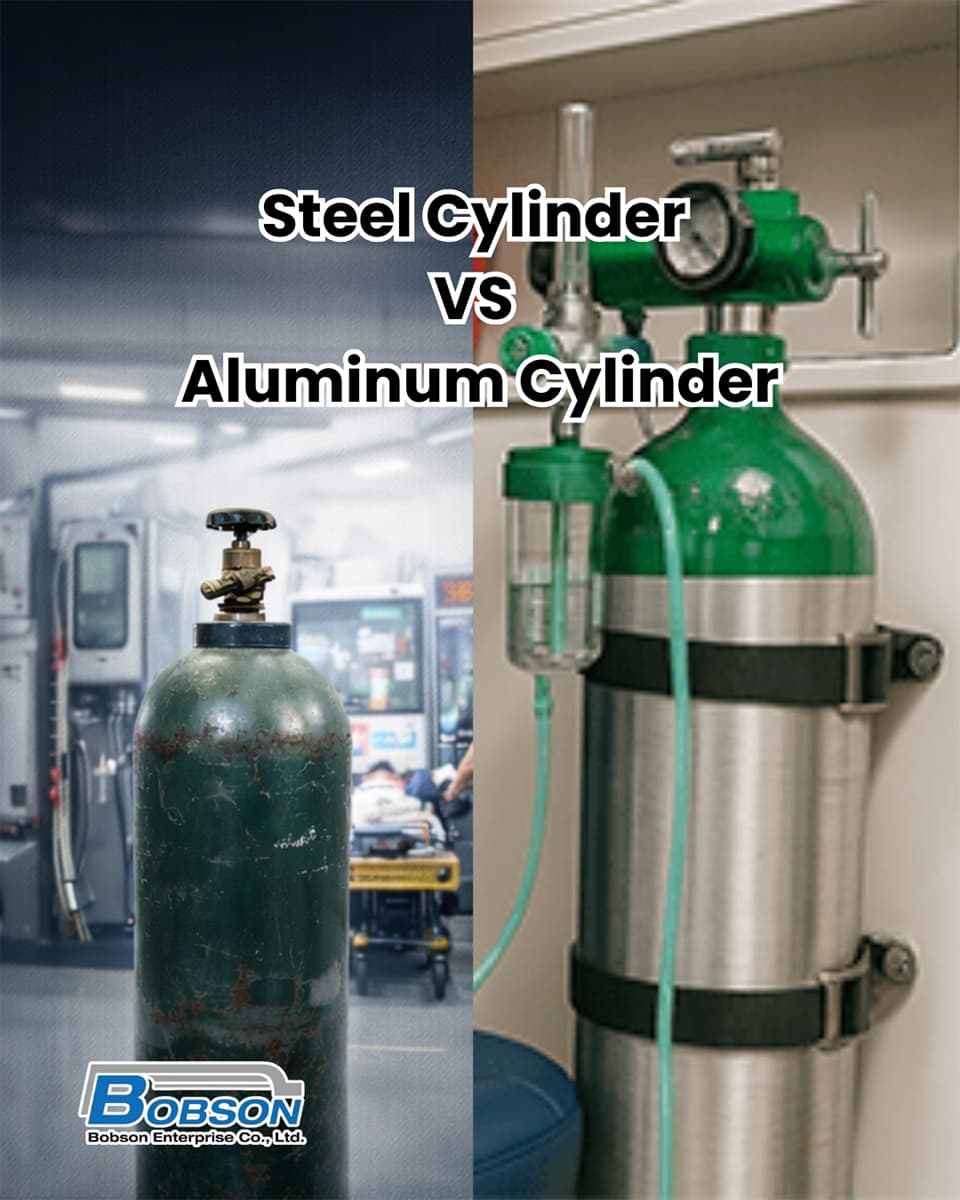
Medical oxygen cylinders are commonly used in:
These environments share one critical characteristic: There is no backup time and no alternative oxygen source.
Any failure—structural, mechanical, or pressure-related—immediately threatens patient safety.
Early medical oxygen cylinders were typically manufactured using forged steel.
This choice was driven by historical manufacturing realities:
At the time, medical equipment was less mobile and exposure to handling risk was limited.
Modern medical environments have fundamentally changed—and forged steel cylinders no longer match today's safety demands.
Forged steel oxygen cylinders are significantly heavier than modern alternatives.
In today’s healthcare settings:
Increased weight directly increases drop, impact, and misuse risk.
From a materials engineering perspective, forged steel:
In medical environments, these risks are unacceptable.
Healthcare environments involve:
Steel oxygen cylinders are:
6061 aluminum alloy one-piece medical oxygen cylinders were developed specifically to address these risks.
Key Advantages of 6061 Aluminum Oxygen Cylinders:
For medical applications, predictable performance matters more than maximum strength values.
At Bobson Cylinders, safety is not treated as a final inspection step. Medical oxygen cylinder safety must be engineered into the product from the start.
Our Manufacturing Safety Approach Includes:
All medical oxygen cylinders are manufactured in compliance with standards such as DOT 3AL, ensuring acceptance across global medical and transportation systems.
In medical applications, higher pressure (e.g., 4500 PSI) is not about performance competition. It is used to:
High pressure is justified only when it improves system safety—not complexity.
Forged steel oxygen cylinders served an important role historically.
However, modern healthcare environments demand lighter, safer, and more predictable solutions.
6061 aluminum alloy one-piece medical oxygen cylinders are now the preferred standard because they better align with modern medical safety, handling, and risk-control requirements.
At Bobson Cylinders, safety is not about passing standards. It is about being worthy of trust in the worst possible conditions.
